



PRODUKTE FALLSTUDIEN LEISTUNGEN JOBS KONTAKT IMPRESSUM MEETINGS
DE  |  ENGLISH       
DB2 - Produkte System / z/OS Anwendungsentwicklung Rechenzentrum

 
BCV4


BCV4 Automates Cloning of DB2 Systems
BCV4 automates the duplication, colloquially 'cloning', of entire DB2 systems. It generates the jobs to copy all volumes of the original DB2 subsystem, and turns these copies into a new functioning DB2 system - the clone of the original. SAP calls such a clone a 'Homogeneous System Copy'. BCV4 supports 'single' and 'shared' environments and is compatible with every copy service like native ADRDSSU, Flashcopy, Snapshot, ShadowImage, etc. BCV4 clones complex systems, even combined IMS/DB2 configu-rations, in record time.
It automates the whole process: renames datasets, changes VTOCs and VVDS', creates new catalogs, recatalogs all files, and adjusts the new DB2 to its datasets.

  • BCV4 is the preferred solution for SAP/DB2 and Peoplesoft/DB2 users to create test environments.
  • BCV4 is ideal to ease and to prepare the impending upgrade from DB2 Version 7 to Version 8.

NEW Features

  • BCV4 now allows cloning in 24x7 environment. The DB2 clone will be brought up using DB2's own recovery routines!
  • BCV4/Easy generates process parameters automatically: volume pairs, VCAT, HLQ, BSDS, Logfiles, etc


Image

BCV4 offers substantial benefits

  • Quickly clones entire DB2 and IMS systems
  • Fully automatises the cloning process
  • Avoids manual works
  • Significantly reduces the time required for the cloning
  • Compatible with TimeFinder, Snapshot, Flashcopy, Shadowimage, etc
  • Creates SAP/Peoplesoft/DB2 clones for test environments
  • Creates playgrounds for DB2 release changes (DB2 V8)
  • Allows cloning DB2 systems in a 24x7 environment
  • The BCV4Easy interface simplifies the setup for the cloning process.


BCV4 automates cloning of DB2 systems.

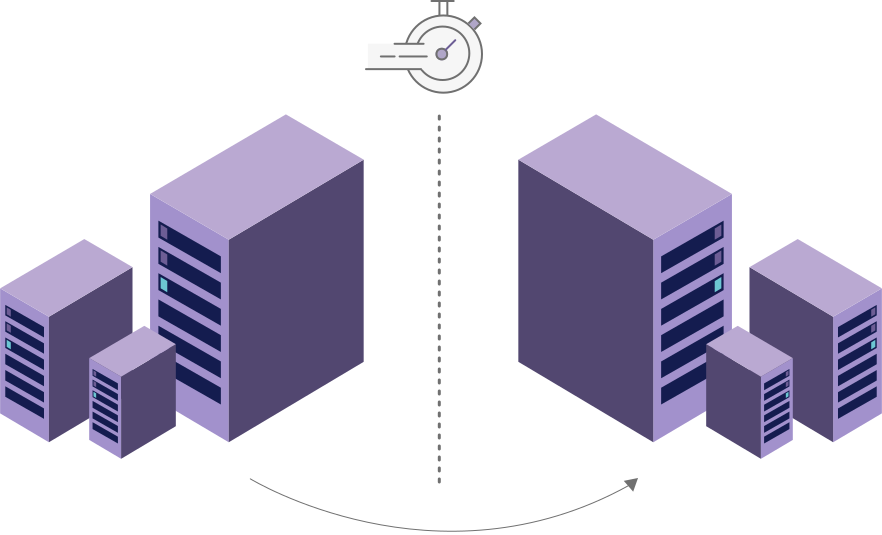
BCV4 automates the cloning of entire DB2 systems. It turns pure 'volume copies' of an entire DB2 system, from single or shared environments, into a new functioning DB2 system, a clone of the original. See Figure: Volume-based cloning with BCV4. SAP calls such a clone a 'Homogeneous System Copy'. BCV4 provides a DB2 system clone within the shortest time possible. It automates the whole process: renames datasets, changes VTOCs and VVDS', creates new catalogs, recatalogs all files, and adjusts DB2 to its new environment. Both products motivation is to keep the copy time short and to minimize any outage of the source. You are as well interested in fast and easy DB2 Database copies? See BCV5.

DB2 Homogenous Copy under z/OS, colloquially "DB2 Clone".

As a user of SAP/DB2 or Peoplesoft/DB2 you occasionally require a homogenous copy of a whole DB2 system, usually for tests with production alike data.

How much time do you spend creating a DB2 clone? Several hours? A day? Two days? How would you like to a software product that could create a DB2 clone completely automatically, making it available within 15 minutes? BCV4 takes only one pass to:

  • Rename datasets
  • Adapt the volume descriptors: VTOC and VVDS
  • Create new UCATs and recatalog all files
  • Adjust DB2: Cat./Index, Bootstrap, Logcopy, Logs, Table Spaces etc.

In a nutshell, BCV4 does everything necessary to set up a working DB2 system after the volumes have been copied. How you create the volume copies is unimportant. You can work with volumes created using point-in-time copies of Fast Data Replication tools such as ESS FlashCopy, RVA SnapShot , or 'Splits of Continuous Mirror' tools such as EMC Timefinder, HDS ShadowImage, Softek TDMF, Fujitsu Equivalent Copy, or simply with native ADRDSSU.


Buyer's Checklist DB2 Subsystem Cloning

Image

Image
BCV4 in "Technical Support"

Image


Image
poster as PDF


read more 

DB2 Subsystem Clones

BCV4 User Report

BCV4 for the Change
of DB2 Releases
 

BCV4 Evaluation
and Acceptance Criteria


Advisement and support for the upgrade for DB2 Version 8

IBM - BCV4

IBM - BCV4 / BCV5


Image
BCV4 is a vendor independent tool that gives you access to data sets on 'cloned' volumes created with whatever you have available. The copy process can be seamlessly integrated into the overall BCV4 process.

Homegrown DB2 Application

You may use SAP, Peoplesoft, or run your homegrown application - with BCV4 you will be able to provide a system clone within minutes. BCV4 should be used in any situation where a DB2 instance has to be copied and where its size dictates that only volume copies are feasible, i.e. fast enough. Whether it is the basis of a SAP system or of any other application does not matter.

BCV4 generates a batch process that contains between 8 to 50 jobs dependent on the configuration. The entire process of creating a DB2 clone is reduced to just starting a job stream. Using a fast-copy function together with BCV4 can make a ready-to-use clone available within 15 minutes.

The figure below shows how the cloned system is available inside 15 minutes based on an environment with about 70,000 datasets and over 300 volumes.

Image


More technical background:
 

A great disadvantage of classical copy methods based on DFSMSdss or SAP R/3 Export/Import transactions is the long runtime and associated downtime of the system being copied. In addition, protracted DB2 activities, lasting perhaps two days, are then required to really make the copy useful. With BCV4 all these activities including the copy process itself can be combined in one single batch process.

Modern storage systems have sophisticated methods to duplicate volumes extremely quickly (within seconds) or to continuously mirror volumes which can be quickly separated to act as independent copies. However, such copies can only be used for volume dumps on the same sysplex since the files all have exactly the same names as the originals on the source volumes; the catalog still points to the source files, etc.

Image
Duplicate VVDS names, duplicate VTOC names and thousands of duplicate DSNs prevent productive use of the copy. Therefore the copied files have to be renamed and recataloged and the new names also have to be correctly updated in DB2. BCV4 carries out all the necessary activities within a few minutes, regardless of the size of the system.


Fig. shows what BCV4 does
 

The BCV4 run uses parameters in a control file. Essentially it contains the relationships between the source and targets. To illustrate this the following control statements give an example of how it would look in a typical procedure.

Image

 
Go to Top